
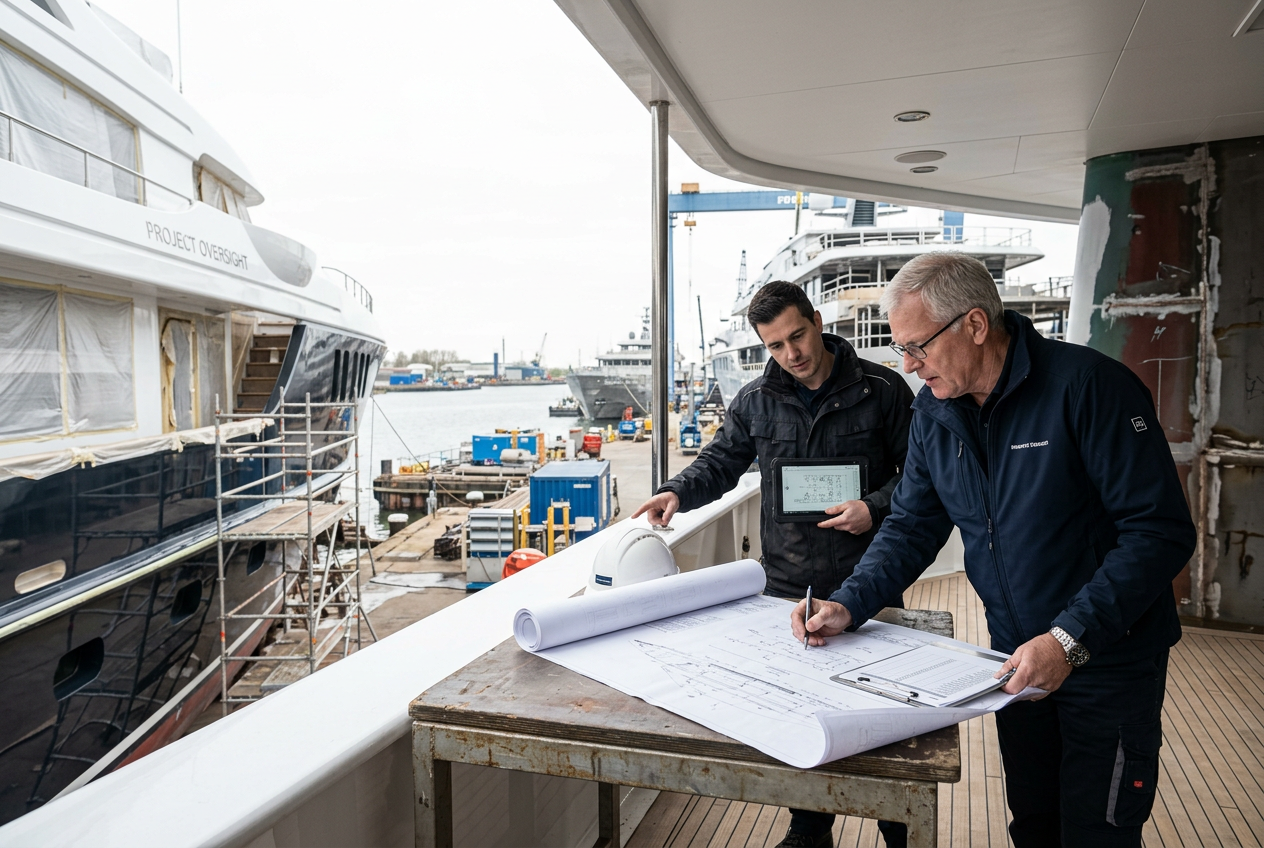
When people first hear the phrase owner-side technical oversight, they often picture occasional yard visits and progress updates. In practice, it is much broader than that. On a yacht new-build or refit, owner-side oversight usually means one side of the table is focused entirely on the owner’s technical, operational, documentation, and delivery interests from early planning through acceptance and warranty follow-up.
That matters because yacht projects are crowded environments. Designers, shipyards, subcontractors, surveyors, suppliers, class, flag, interior teams, commissioning engineers, and crew can all be involved at different stages. A project may be moving forward on paper while important details are still unresolved in specifications, approvals, interfaces, testing, or documentation. Owner-side technical oversight is there to reduce those blind spots before they become delays, extra cost, or a difficult handover.
It usually starts before the visible work does
Good owner-side oversight does not begin when steel is cut or when the yacht arrives in the shed. It usually starts earlier, when the project definition is still forming. At that point, the job often includes reviewing the technical brief, checking whether the scope is clear enough to price and build properly, comparing shipyard or contractor proposals, reviewing specifications, and helping set realistic milestones, reporting lines, and documentation control. On a new-build, that may also include tender review, contract support, and checking whether the design intent and the build package still match.
This early stage is where many expensive problems are planted. A specification can look complete while leaving gaps around interfaces, approvals, testing responsibilities, owner supply items, or acceptance criteria. Once procurement and installation start, those gaps tend to come back as change orders, delays, disputes over responsibility, or rushed decisions. Owner-side oversight at this stage is less about “watching the yard” and more about making sure the project is defined tightly enough to control.
During the yard period, it is not just inspection
Once the project is underway, owner-side technical oversight becomes more visible. That usually includes site attendance, inspections, progress checks, review of shop drawings and submittals, coordination meetings, change review, risk tracking, and regular reporting back to the owner or owner’s team. In larger or more technical projects, it may also include coordination with specialist surveyors, engineers, or consultants covering paint, machinery, electrical systems, interiors, AV/IT, or regulatory items.
A useful distinction here is that oversight is not the same thing as quality control alone. Yard QA/QC is part of the builder’s own system. Owner-side oversight looks at a different question: does the work meet the agreed specification, the intended operating profile, the documentation trail, the class or statutory pathway, and the owner’s actual priorities? A component may be installed neatly and still be wrong for service access, still be missing an approval step, or still be inconsistent with the agreed configuration.
That is also why reporting matters. Good owner-side reporting is not a glossy weekly summary. It should show what has progressed, what is pending, where approvals are stuck, which risks are growing, what decisions are needed, and whether any issue threatens cost, timing, compliance, or final operability. The owner does not need every workshop detail, but they do need clear visibility of the decisions that affect the project outcome.
Class, flag, and technical approval work sit inside the same picture
One reason this role is often misunderstood is that people separate technical oversight from class and flag work too sharply. In real projects, those threads overlap constantly. Class requirements and survey pathways affect drawings, equipment approvals, installation details, tests, records, and delivery timing. IACS describes its Unified Requirements as minimum requirements connected to classification society rules and practices, including areas such as machinery installations, electrical and electronic installations, navigation, and survey and certification. In other words, approvals are not an isolated paperwork stream; they influence how the yacht is actually built, tested, and signed off.
For that reason, owner-side oversight often includes following comment status, checking whether submissions are moving, confirming that installed equipment matches approved intent, monitoring survey readiness, and making sure unresolved technical items do not pile up until the end of the project. When those items are left too late, the result is usually pressure at exactly the wrong time: just before trials, delivery, or charter deadlines.
Trials, acceptance, and delivery are part of the job
Many people notice the value of owner-side technical oversight only near the end, when the project reaches dock trials, harbour tests, sea trials, or final acceptance. By then, the role typically includes verifying that systems operate as specified, recording deficiencies, checking whether open items are properly assigned and tracked, supporting acceptance procedures, and making sure the documentation package is not left as an afterthought. Industry practice pages describing owner representation and project management routinely place trials, delivery procedures, final acceptance, and warranty support inside the same scope of work.
This is where the term technical oversight earns its name. A trial is not only about whether a system turns on. It is about whether the result is measured properly, whether the test condition is meaningful, whether the defect record is clear, whether class or flag expectations are met where relevant, and whether the owner is accepting a finished item, a temporary workaround, or an unfinished promise. Without disciplined oversight, late-stage pressure can turn those differences into handover problems that surface after delivery.
It also covers the paperwork that decides whether delivery feels complete
A yacht can look finished and still be poorly handed over. Owner-side oversight often extends into manuals, certificates, as-built information, commissioning records, warranty logs, punch-list status, spare-parts records, and confirmation that training or familiarisation has actually happened where needed. That administrative side sounds less dramatic than a trial or an inspection, but it strongly affects whether the yacht enters service smoothly or starts life with missing information and unresolved liabilities. Both project-management and owner-representation descriptions in the market treat delivery and warranty tracking as part of the same continuum, not as separate afterthoughts.
What owner-side technical oversight does not mean
It does not mean distrusting the yard by default, and it does not mean duplicating every task the captain, crew, designer, or surveyor already performs. A good owner-side function is supposed to connect those moving parts, challenge gaps, and keep decisions visible. It is there to protect alignment. On one project that may require heavy day-to-day involvement. On another, it may mean targeted review at design gates, inspections, trials, and delivery. The right level depends on project scale, complexity, owner availability, yard familiarity, and how much technical risk is being carried.
At its best, owner-side technical oversight is simple in purpose even if the work is not: define the project clearly, monitor whether it is being delivered as agreed, identify problems early, and stop the final months from becoming a scramble of late discoveries. That is why it matters on both refits and new-builds, and why experienced teams treat it as a control function, not a ceremonial presence at the yard.
